Smart and AMR Meters
Understanding the Difference and Choosing What Works Best for You
Metering may not be the most talked-about part of your energy supply, but it quietly does some of the most important work behind the scenes. The type of energy meter installed at your property affects how your usage is recorded, how accurate your bills are, and how much visibility you have over your energy consumption.
One of the most common questions energy suppliers receive is:
“What’s the difference between a smart meter and an AMR meter, and which one is better?”
The honest answer is simple: neither is universally better. Smart meters and Automated Meter Reading (AMR) meters are designed for different needs, and both continue to play an important role in the UK energy market.
Why Energy Metering Matters More Than You Might Think
A good metering solution helps to:
Ensure accurate data based on real consumption
Eliminate estimated bills
Reduce the need for manual meter readings
Improve trust and transparency
Support better energy management over time
Choosing the right meter isn’t about chasing the latest technology. It’s about selecting a system that fits your property, your usage patterns and your long-term energy plans.
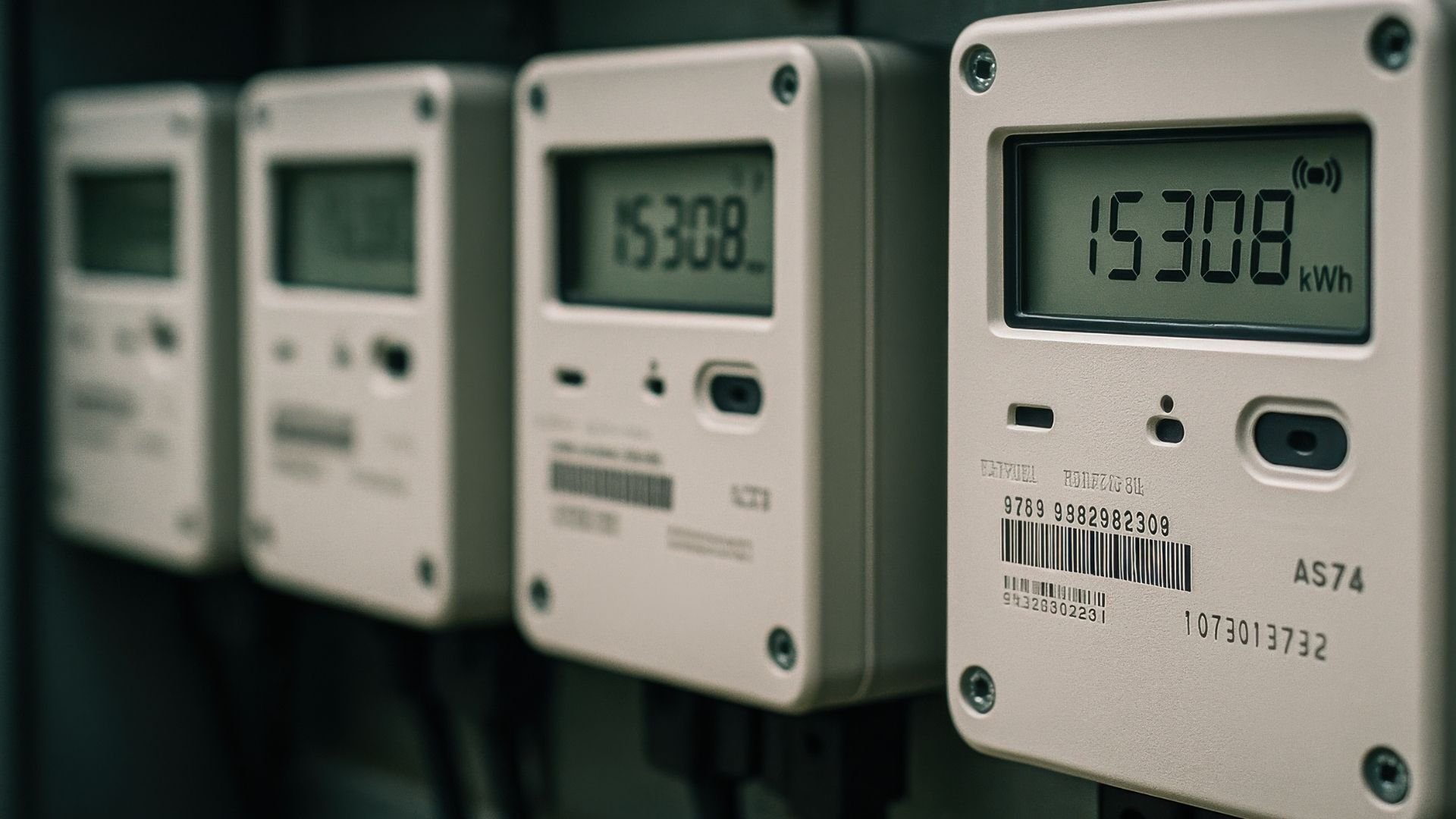
What is an AMR meter?
An Automated Meter Reading(AMR) meter automatically sends meter readings to your energy supplier at regular intervals, removing the need for manual meter readings and helping ensure bills are based on actual consumption rather than estimates.
AMR meters have been a cornerstone of commercial energy supply for many years and continue to be widely used across business properties today. They are a well-established and trusted metering solution, particularly for their consistency, dependable data and straightforward billing.
How AMR meters work
AMR meters transmit consumption data using secure mobile networks or fixed communication systems. In most cases, they send readings once or twice per day, although with market-wide half-hourly settlement reforms coming into effect, AMR meters would start transmitting half-hourly data.
Their design is deliberately focused to do one job exceptionally well: collect accurate energy usage data and pass it directly to the supplier for billing. This focused approach provides consistent data delivery with minimal intervention, allowing energy usage to be measured and billed accurately without unnecessary complexity.
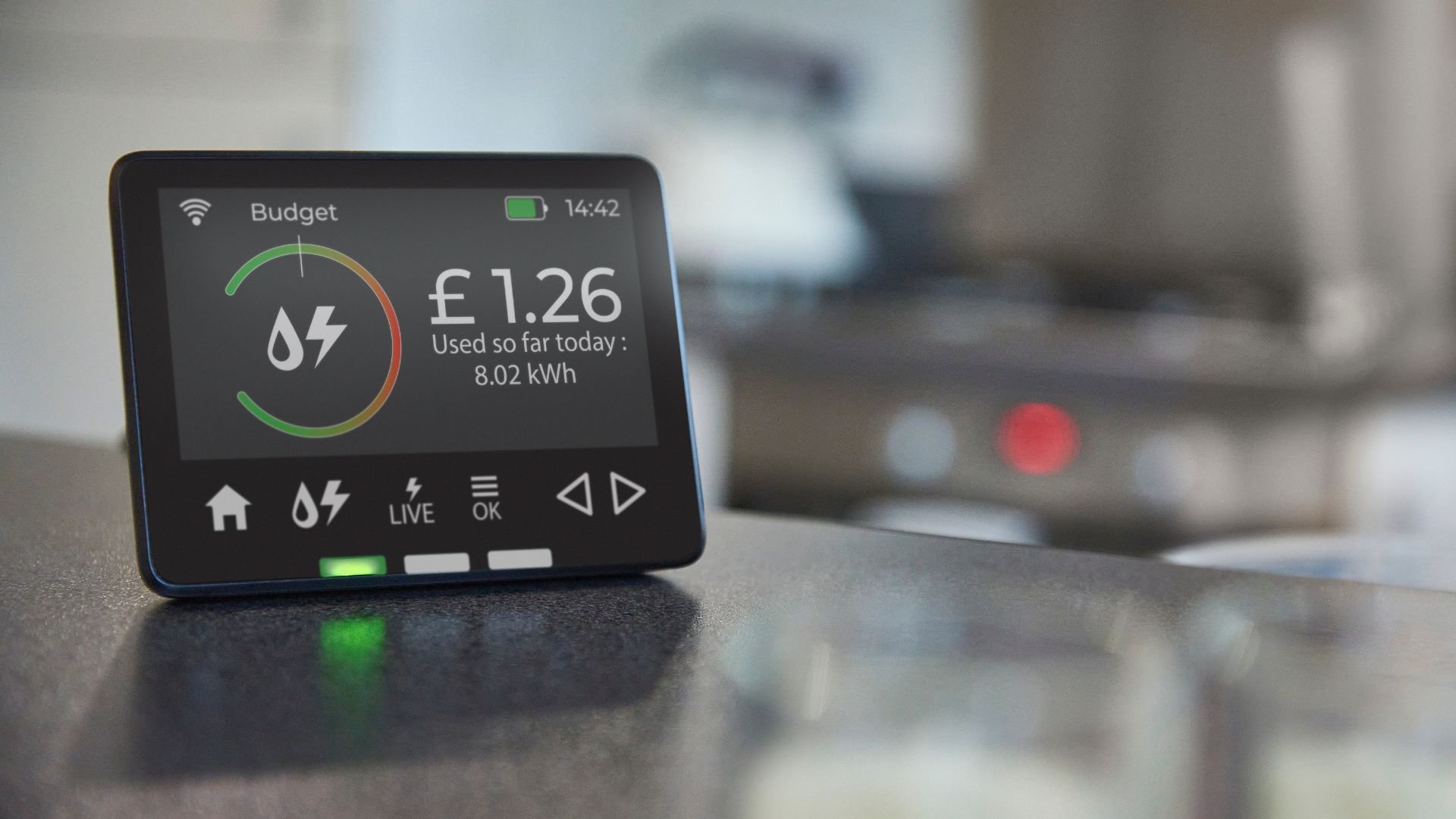
What is a smart meter?
A smart meter is a newer generation of meter introduced as part of a national rollout across Great Britain. Smart meters measure energy consumption in real time and communicate that data securely through a central communications network.
Smart meters are now the standard meter type for domestic customers and are also used for smaller businesses.
How smart meters work
Smart meters record energy usage in half-hourly intervals and send this information to your supplier through the national smart data network. For domestic customers, they are often paired with an in-home display that shows real-time usage and costs.
In addition to automated readings, smart meters support:
Remote configuration
Compatibility with time-of-use tariffs
Integration with future energy technologies
Smart Meters vs AMR Meters for Commercial Customers
When it comes to business energy supply, the choice between a smart meter and an AMR meter is often more nuanced than it is for households.
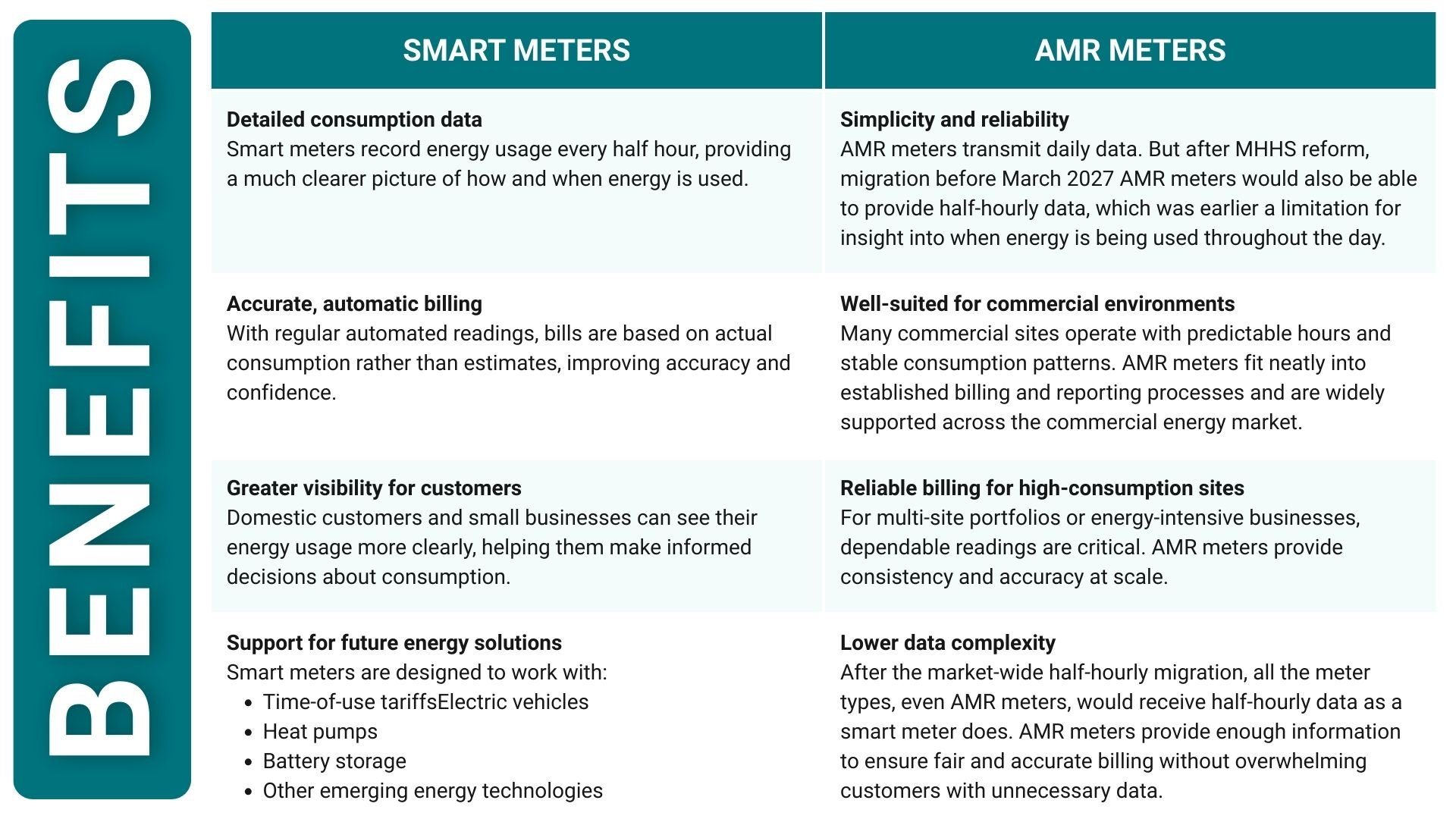
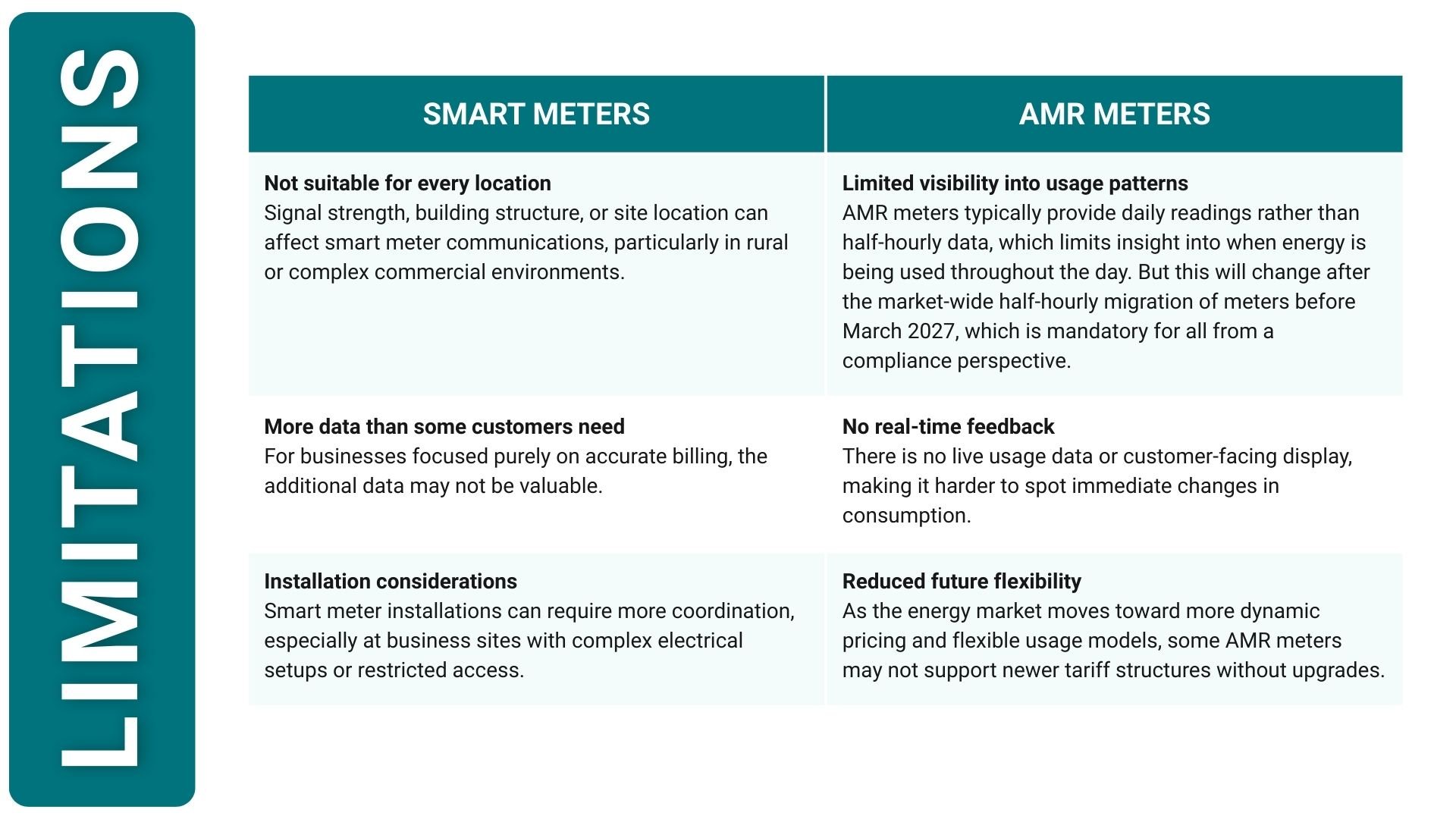
For many medium to large organisations with stable and predictable energy usage, AMR meters remain a reliable and practical fit. They provide accurate, consistent readings that support clear invoicing without introducing unnecessary complexity. Businesses with regular operating hours, established billing processes, or multiple sites often value this simplicity, as it allows energy management to remain straightforward and reliable across their portfolio.
Smart meters, by contrast, can be better suited to smaller businesses or sites where energy usage varies throughout the day. Two-way data access can offer greater visibility into consumption patterns and support businesses considering flexible or time-of-use tariffs, electric vehicles or on-site generation. For customers looking to actively monitor and adapt their energy usage, smart metering can provide useful insight. However, for some medium and large sites, factors such as building structure, signal strength or location can affect smart meter communications.
Our view for commercial businesses
Ultimately, there is no single best option for all businesses. AMR meters remain a practical and reliable choice for many commercial sites, while smart meters can add value where greater visibility and flexibility are priorities.
The key is matching the meter to the way the business operates, rather than forcing a particular technology where it doesn’t naturally fit.